
Should I Worry About Freezing Compressed Air or Moisture Contamination Instead?

As temperatures drop, one of the most common questions we hear is: Should I worry about my compressed air freezing, or is moisture contamination the bigger issue? The truth is that moisture is the real problem - and it’s what causes freezing in compressed air systems. Understanding this relationship can help you prevent costly downtime and equipment damage year-round.
Moisture Causes Freezing in Airlines
Compressed air always contains water vapour. When air is compressed, the vapour becomes concentrated. Without proper drying or filtration, it condenses into liquid water that travels through your lines. In cold weather, this moisture can freeze inside valves, lines, and air tools, leading to:
Restricted or blocked airflow.
Frozen control lines and actuators.
Cracked fittings and tubing.
Corrosion and premature wear.
So, when you’re dealing with frozen air, it’s not the air itself that’s freezing - it’s the moisture inside it. Managing that moisture is the key to preventing freeze-ups.
Why Moisture Contamination Is a Year-Round Concern
Even outside of winter, excess moisture in your compressed air can cause serious problems. Over time, it can:
Corrode pipes and tanks, leading to leaks and pressure loss.
Contaminate end products in food, beverage, and manufacturing industries.
Reduce air quality, affecting sensitive pneumatic equipment.
Shorten the lifespan of filters, dryers, and air tools.
Promote the growth of bacteria.
In short, moisture contamination affects both reliability and efficiency - and it can cost you far more than just winter headaches.
How to Prevent Freezing and Moisture Problems
You can prevent both freezing and contamination with the right maintenance and equipment.
Here’s how:
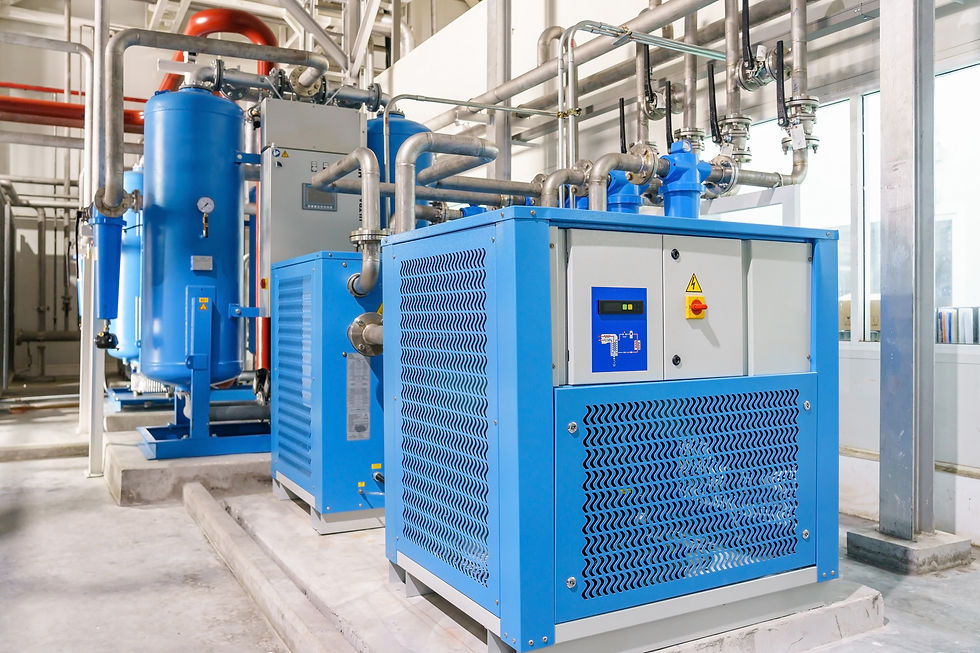
1. Install the right air dryer – A refrigerated or desiccant dryer removes moisture before it reaches your tools or lines. Deliquescent dryers can also be used, but only as ‘dewpoint suppression,’ which simply lowers the dewpoint of the compressed air from ambient temperatures. Remember also that an air dryer does not remove water; it condenses or adsorbs water vapor. The use of moisture separators and drains is what removes water.
2. Add proper filtration – Coalescing filters capture liquid water, oil, and particulates that dryers might miss.
3. Use automatic drains – These prevent condensate buildup in tanks and piping.
4. Monitor dew point – Make sure your dryer maintains a dew point below your lowest ambient temperature.
5. Protect exposed lines – In cold environments, use insulation or heat tracing to keep moisture from freezing.
A proactive approach keeps your system dry, efficient, and reliable — no matter the season.
Get a Free Consultation Today!
At SteddyAir, we understand that clean, dry air isn’t just a comfort - it’s a necessity for consistent production and equipment longevity. Our team can assess your compressed air system, identify moisture risks, and recommend the right dryers, filters, and maintenance plans for your operation.

Comments